

Nonwoven textiles and technical textiles producers are entering 2026 with a familiar challenge that now feels less cyclical and more structural: customers want higher-performing industrial textiles, faster qualification, and clearer sustainable textiles claims, while nonwoven manufacturing plants must protect margins amid volatile energy and raw-material costs. The result is a tighter link between materials selection, nonwoven machinery configuration, and data strategy. Decisions that used to be made in separate meetings—polymer choice, bonding method, quality control, and end-market targeting for medical nonwovens, barrier fabrics, or filtration—are increasingly negotiated as one integrated package.
Across hygiene, filtration, building materials, automotive, and medical nonwovens segments, the winning nonwoven manufacturing projects share a common thread: they reduce risk in scale-up from pilot to full production. That means fewer recipe changes, more stable web formation, and quality metrics that translate directly into customer specifications for technical textiles. In practice, the most competitive manufacturers are treating each nonwoven textile product launch as a controlled industrial system rather than an R&D experiment.
Materials innovation is becoming process innovation
Materials innovation in nonwoven textiles is no longer confined to “new resin, same line.” Producers are evaluating how additives, bicomponent architectures, and recycled content behave under real nonwoven machinery line speeds, real humidity swings, and real maintenance intervals. In spunbond and meltblown textile technology, the conversation often starts with melt flow and ends with downtime. A resin that looks ideal in lab rheology can still create instability at the die, accelerate filter loading, or complicate start-ups after a grade change.
One of the most practical shifts in technical textiles is the move toward formulations designed for predictable processing windows in nonwoven manufacturing. Instead of chasing maximum property gains, suppliers are emphasizing “manufacturing-friendly” consistency. Process stability is becoming a product feature, especially for large-volume hygiene and industrial wipes where small deviations can cascade into scrap. For technical textiles, the focus is on targeted performance: improved electrostatic charge retention in filtration media, heat resistance in under-hood automotive, or chemical compatibility for battery separators and industrial sorbents.
Recycled and bio-based inputs remain a priority in sustainable textiles, but the industrial reality is that they must be engineered to behave like prime materials on nonwoven machinery. Producers are setting stricter incoming controls and using blending strategies to smooth variability in biodegradable polymers and recycled streams. The most successful programs treat sustainability claims as a chain-of-custody and specification discipline, not a marketing overlay. Traceability is now part of qualification, particularly for brands and OEMs that require auditable documentation for medical nonwovens and barrier fabrics.
Bonding and finishing upgrades focus on energy and reliability
Mechanical and thermal bonding choices in nonwoven manufacturing are being re-evaluated through an energy lens. High electricity prices in many regions have pushed manufacturers to quantify energy per square meter as closely as they measure tensile or basis weight in nonwoven textiles. Thermal bonding lines, ovens, and calenders are being tuned not just for output but for heat recovery, insulation performance, and faster stabilization after start-ups and stops on nonwoven machinery.
Hydroentanglement continues to expand in wipes and specialty nonwoven textiles, yet water and effluent management is now central to the business case for spunlace capacity. Plants investing in new nonwoven machinery are planning closed-loop filtration, better nozzle monitoring, and predictive maintenance to reduce unplanned quality shifts. The operational aim is simple: keep the fabric uniform without “chasing” defects by raising energy, water pressure, or chemical usage.

Finishing chemistry for industrial textiles is also shifting toward multifunctional packages that reduce steps on the line. Antimicrobial claims are more carefully scrutinized, while durable repellency, low-lint performance, and water-resistant textiles requirements are increasingly specified in industrial and cleanroom contexts. Customers want performance that survives converting and logistics, not just a strong lab result on a fresh roll of nonwoven fabric.
Machinery trends: modular lines, smarter controls, faster changeovers
Capital projects in 2026 are less about buying the “biggest” line and more about buying flexibility in nonwoven machinery. Modular configurations allow nonwoven manufacturing sites to add capacity or capability without rebuilding the entire plant layout. In airlaid, carded, spunlace, and spunmelt platforms, OEMs are emphasizing the ability to switch between product families—such as medical nonwovens, barrier fabrics, and filtration media—with fewer mechanical interventions and shorter qualification cycles. A practical supplier qualification guide helps teams validate these changes consistently.
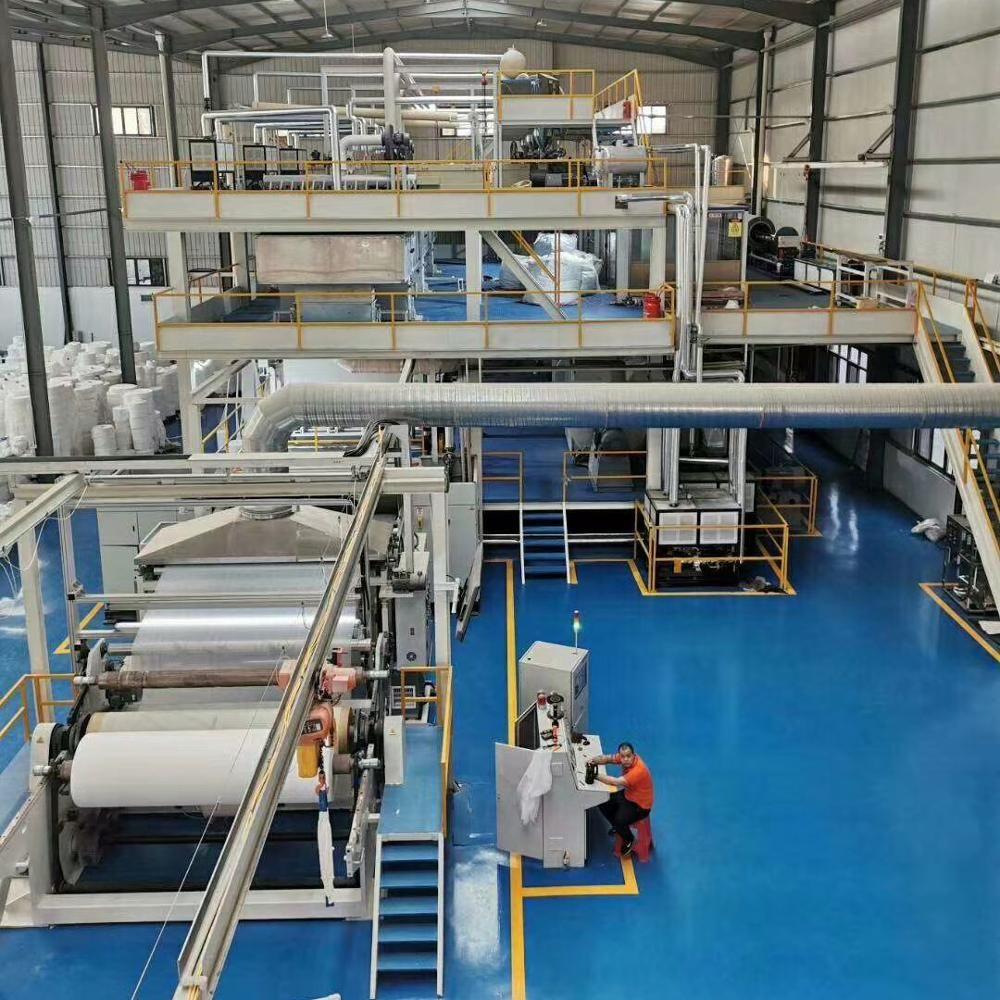
Automation is moving beyond basic line control into operator decision support for textile technology. Advanced recipe management, guided start-up sequences, and digital work instructions help reduce variability between shifts in nonwoven manufacturing. For plants running multiple product grades, the economic impact is significant: fewer off-spec rolls after changeovers and more predictable delivery dates. Changeover time is now a strategic KPI because it directly affects responsiveness to short-run technical textiles orders and private-label programs.
In web formation and fiber laydown, nonwoven machinery improvements are targeting uniformity at higher speeds. Better airflow management, refined spinneret designs, and more precise temperature control reduce streaks and basis-weight variation in nonwoven textiles. For converters and end users, those gains translate into fewer breaks, better printability, and more stable downstream performance. In highly regulated markets, machinery upgrades are also being justified by documentation: the ability to record key parameters and demonstrate control is becoming a prerequisite for long-term supply agreements in medical nonwovens and other technical textiles.
Digital quality control shifts from inspection to prevention
Quality systems in nonwoven manufacturing are evolving from “find defects” to “avoid defects.” Inline inspection—vision systems, thickness measurement, basis weight monitoring, and defect classification—has matured in nonwoven machinery, but the competitive edge now comes from connecting those signals to root-cause analysis. Plants that can correlate a defect map with die temperature drift, filter differential pressure, or humidity changes can act before a small deviation becomes a full production issue in nonwoven textiles.
Manufacturers are also improving how they communicate quality to customers in technical textiles. Instead of sharing only certificate-of-analysis values, some suppliers provide roll-level data summaries that align with the customer’s process needs, such as variability bands and defect frequency for barrier fabrics or filtration media. This strengthens trust and reduces disputes in claims management. Data transparency is becoming a commercial differentiator in technical nonwovens where performance depends on uniformity more than on a single average value.
Importantly, digitalization is being implemented pragmatically in nonwoven manufacturing. Rather than attempting a full “smart factory” overhaul, many plants are prioritizing a few high-impact loops: stabilize polymer feed, reduce start-up scrap, and predict maintenance events that affect quality on nonwoven machinery. The payoff is often measured in uptime and customer returns for nonwoven textiles, not in dashboards.
Market and events: where demand is consolidating and where it’s emerging
Hygiene remains a volume anchor in nonwoven textiles, but growth is increasingly tied to product differentiation, regional capacity shifts, and private-label competition. At the same time, filtration is gaining strategic importance as air quality standards tighten and industrial processes demand higher efficiency with lower pressure drop. Producers that can deliver consistent fine-fiber structures in meltblown and spunmelt nonwoven manufacturing, and maintain stable electrostatic performance, are well positioned—particularly when they can document performance over time and across storage conditions.
In construction and geotextiles, demand for industrial textiles is influenced by infrastructure spending and climate resilience projects. Nonwovens used for drainage, reinforcement, and protective layers are being specified with longer service life expectations, pushing manufacturers to validate durability and UV stability more rigorously. Automotive and mobility applications continue to evolve with lightweighting and electrification, opening space for thermal management, acoustic insulation, and battery-related technical textiles.
Textile trade fairs and industry events in 2026 are reflecting this convergence of materials, nonwoven machinery, and data in textile technology. Conferences and exhibitions are placing more emphasis on pilot-scale validation, recycling pathways, and compliance-ready documentation for sustainable textiles and medical nonwovens. For buyers and technical teams, the most valuable meetings are those that bring polymer suppliers, equipment OEMs, and converters into the same technical conversation, because product success is increasingly determined at the interfaces.
For manufacturers planning the next 12 to 24 months, the most resilient strategy is to align nonwoven textiles product roadmaps with operational capability in nonwoven manufacturing. Investment choices that reduce variability—whether through better resin control, smarter bonding, or actionable QC—tend to pay back across multiple technical textiles markets. In 2026, competitive advantage in nonwovens is less about a single breakthrough and more about building a production system that repeatedly delivers textile innovation at industrial scale.